
Three years ago, I bought a business.
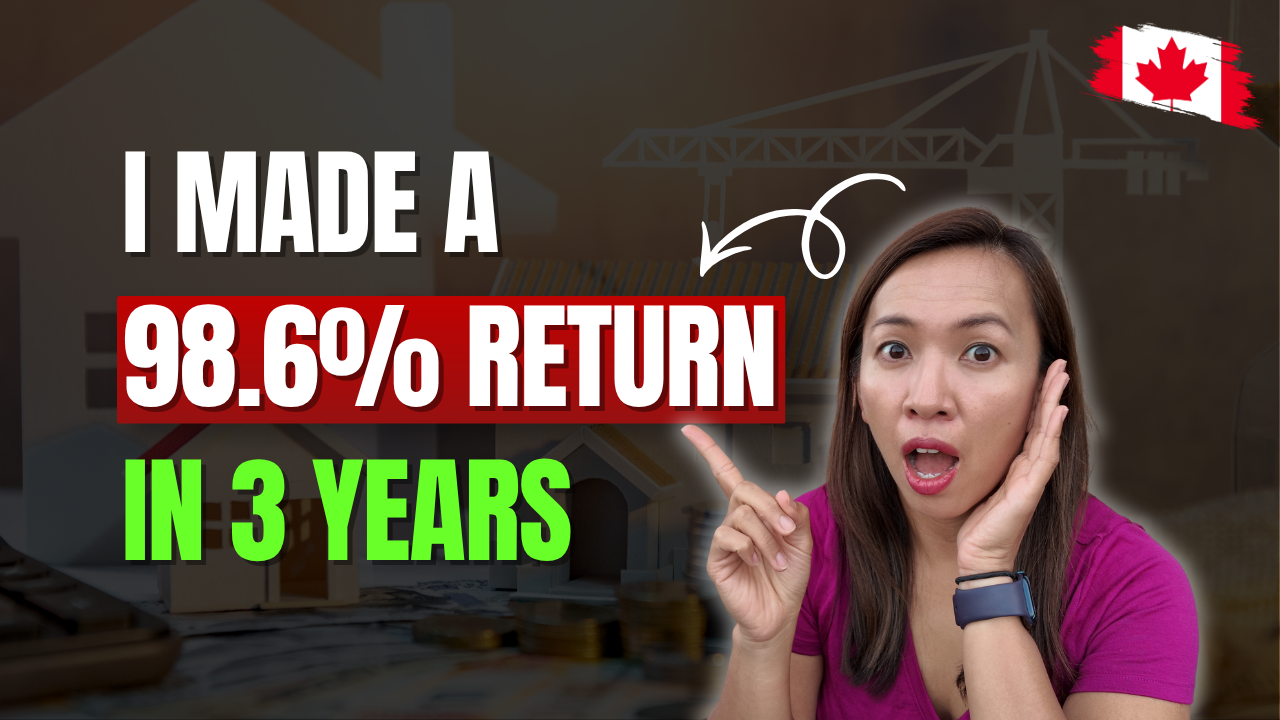
Since then, the equity I have built is equal to about 98.6% of the original purchase price. And I bought it with zero dollars of my own money down.
That sounds like one of those perfect investment stories.
It is not.
There were nights when I lay awake wondering whether I had made a catastrophic mistake. I inherited an employee problem that cost five figures to resolve. I discovered that the “remote” business I thought I was buying required me to fly to Ottawa every month. I watched friends make similar bets and lose almost everything.
So yes, the return is real.
But the return is not the whole story.
If you are thinking about buying a business, I want to show you both sides: how the wealth gets created, and what it can cost you in debt, time, uncertainty, and sleep.
Why I bought a business in the first place
You have heard the advice: do not put all your eggs in one basket.
A few years ago, I finally looked closely at my own basket. Almost everything my family earned or owned was tied to Canadian real estate.
My home was real estate. My rental properties were real estate. My accounting practice served real estate investors. A large part of my registered savings was invested in real estate projects and a private REIT. My husband’s business was in real estate too.
I thought I was diversified. In reality, I had painted the same egg several different colours.
If the real estate market struggled, our properties, investments, and household income could all feel it at the same time. That is concentration risk: too much of your financial life depending on one market.
I decided I needed an asset outside real estate.
The funny part is that I was so deep in the real estate world that I did not even think about buying an index fund. My version of diversification was to buy an entire company.
That tells you how one-track my thinking had become.
How the 98.6% return was created
There are two main ways I built equity in the business. Both will feel familiar if you invest in real estate.
1. The business paid down the acquisition loan
A profitable business is an asset that can be sold. Every time the business makes a payment on the loan used to buy it, the debt goes down and my equity goes up.
It is similar to paying down a mortgage. Even if the value of the asset stays flat, reducing the loan creates equity.
There is an important assumption here: the business has to keep producing enough cash to cover the debt. If the earnings fall, the value can fall too, and the whole calculation starts to wobble.
2. I grew the value of the business
Businesses are often bought and sold using a multiple of their earnings. I bought the company using a formula tied to what it earned. One day, a future buyer will likely use a similar formula.
That means if I increase the company’s revenue and cash flow, I can increase what the company is worth.
Real estate investors already understand this idea. Raise the income of an apartment building and you can force its value up. I applied the same principle to a business instead of a building.
When I combine the debt paid down with the growth in the company, the equity created is about 98.6% of what I originally paid.
Because I did not invest my own cash in the purchase, the mathematical return on my cash is technically infinite. Any return divided by zero produces a meaningless answer.
But calling it an infinite return would be dishonest.
I invested three years of my life. I invested my time, energy, reputation, and attention. The loan may have covered the purchase price, but it did not make the business free.
Zero down does not mean zero risk
When a lender finances a business purchase, it will commonly expect the buyer to contribute part of the purchase price. I received 100% financing. Even the lawyer who closed the deal was surprised.
At the time, I thought, why would I use my own money if I do not have to?
What I did not fully appreciate was that 100% financing also means 100% of the purchase price starts as debt.
And business debt moves quickly.
A real estate mortgage may be amortized over 25 or 30 years. My business acquisition loan was amortized over 10 years. Compress a large loan into a much shorter period and the monthly payment becomes heavy.
That payment arrives every month whether the company has its best month or its worst. It never takes a day off.
This is why cash flow matters so much. A business can look profitable on paper and still struggle to meet its obligations if cash does not arrive at the right time.
Debt can accelerate wealth creation. It can also remove your margin for error.
You buy the history, not just the opportunity
When I bought the company, I did not only acquire its customers, systems, and future earnings. I inherited its past.
There was an employee matter already in motion before I became the owner. I did not create the problem, but when I took over, it became mine to resolve. It cost five figures, including legal fees.
The business covered the cost from its own cash flow, which was one advantage of buying an established operation. Still, it taught me a lesson I will not forget:
When you buy a business, you buy its history too.
Financial due diligence is not enough. You need to understand employee obligations, contracts, customer concentration, legal issues, and any promises the previous owner made before you arrived. Get the right legal and financial advice before you sign.
A remote business may not be a location-free business
I was told the company was remote. I pictured running it from my home in Oakville, coffee in hand.
The work could be done remotely. The relationships could not.
The company’s referral network and client base lived in Ottawa. To build trust and keep the business growing, I needed to be there. I now travel to Ottawa about once a month, meet clients, attend events, and spend time with referral partners.
That travel costs money, but the bigger cost is time away from my family.
If someone tells you a business is location-free, ask where the customers come from. Ask where the referral relationships live. Ask what would happen if the new owner stopped showing up in person.
Remote work and a remote business are not the same thing.
Business equity feels different from real estate equity
This is the accountant’s joke in the whole story.
When you own real estate, you can see the land and building on the balance sheet. You can drive to the property and touch the brick.
The equity I created by growing this company does not appear as a neat line on my balance sheet. It lives in cash flow, customer relationships, systems, goodwill, and the price a future buyer may be willing to pay.
It is real, but it does not become liquid until someone buys the business.
Some days that equity feels substantial. Other days it feels as though the wrong three people leaving at once could damage it.
For real estate investors, that is a major adjustment. A company’s value depends heavily on people and on earnings continuing after the owner steps away.
The right people are the whole game
Growth sounds like a reward. In practice, growth creates a new set of problems.
More clients require more capacity. More capacity requires more people. More people require better systems, clearer roles, stronger management, and more cash.
The right person in the right seat can transform a company. The wrong person in a key role can cost money, damage client confidence, and undo months of progress.
That is one reason I started GrowByNumbers. Business owners need clean, reliable numbers, but they also need help understanding what those numbers mean and putting the right people in the right seats.
You should not have to fly blind in your own business.
Not everyone should buy a business
I have friends who bought businesses and lost badly. One bought a food and beverage franchise, struggled, then opened a second location hoping it would rescue the first. He eventually lost both, sold his family home, and moved away to start over.
Restaurants and franchises can carry thin margins, rising labour and food costs, royalties, marketing fees, and required renovations. When the cushion is small, one mistake can become a crisis.
This is why I will say something that may sound strange after sharing a 98.6% return:
For most people, buying a low-cost index fund is the better choice.
You can invest consistently, keep the career you enjoy, diversify, and sleep at night. You do not inherit employees, legal obligations, short-term acquisition debt, or monthly cash-flow pressure.
There is no shame in choosing the simpler path. For many people, it is the smarter one.
Buying a business may suit you if you have the appetite to build, the ability to handle uncertainty, and enough financial and emotional capacity to survive difficult years. But walk in with your eyes open.
The spreadsheet is the easy part. The debt, the people, and the fear are the real price of admission.
What the investment really returned
On paper, buying this business has been one of the strongest financial moves I have made.
But the biggest return was not financial.
In my real estate and tax world, I was known. I had a reputation, books, a channel, and years of experience. In a new industry and a new city, I was a beginner again. I had to walk into rooms where nobody knew who I was and build relationships from zero.
As an introvert, that was hard. There were real moments when I wondered why I had traded a comfortable, respected position for debt, uncertainty, and the feeling that I had started over.
Three years later, I understand that the discomfort was part of the return.
An index fund can grow your money. This business grew me.
I became more capable, more humble, and braver than the person who signed the purchase agreement. I am still learning, still scaling, and still making mistakes. I am not writing from the finish line.
But I did learn this: betting on yourself can create an extraordinary return, as long as you understand that a real bet includes the possibility of losing.
If you already own a business and you are tired of flying blind on cash flow, forecasts, or team decisions, that is exactly what we help with at GrowByNumbers.
Next Steps
If you want to make sure your file can stand up to a second look, Book a consultation with my team today. We help everyday Canadians navigate the confusing world of taxes so you can keep more of what you earn.
Until next time, happy Canadian Real Estate Investing.
Cherry Chan, CPA, CA
Your Real Estate Accountant