
You can read all the theory you want about missing middle housing — zoning changes, GST rebates, CMHC financing. But at some point, you want to know: what does it actually cost, and what does it actually take, to get one of these built?
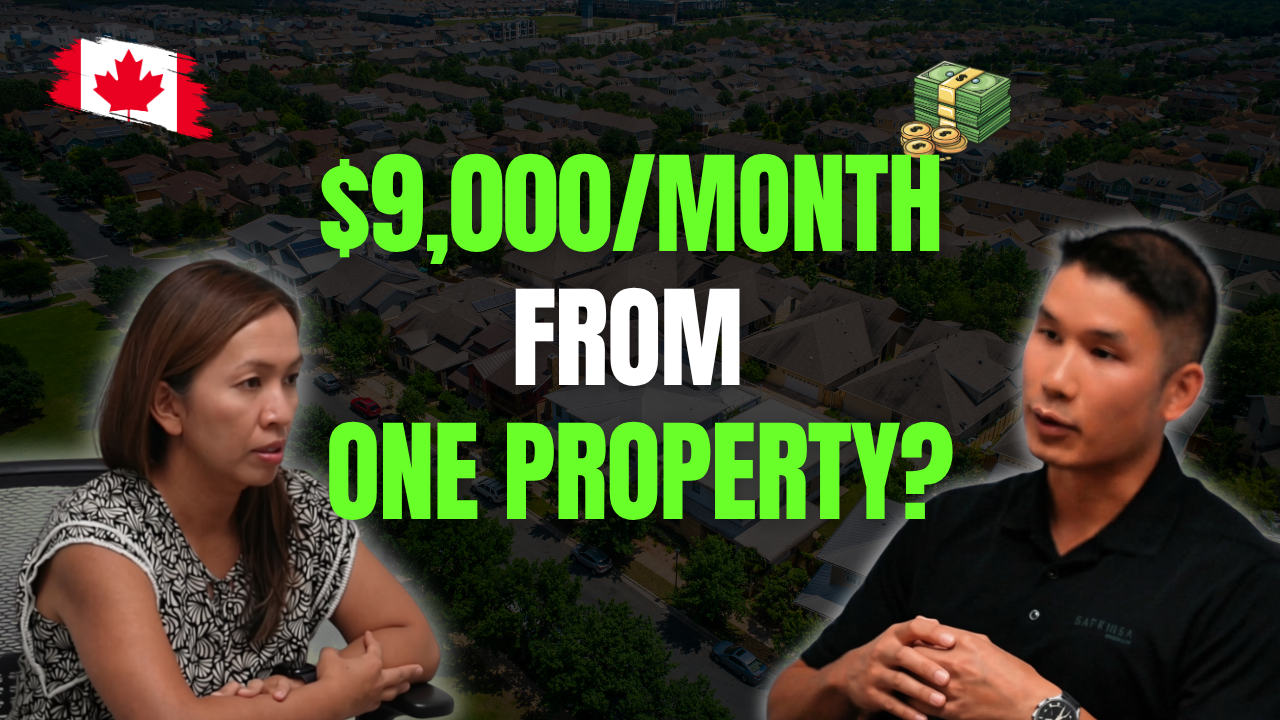
So this week I sat down with Charles Wah, founder of Gateway Group a Hamilton-based construction and renovation company that’s been converting single-family homes into duplexes, triplexes, and fourplexes — and building new multiplexes from the ground up — for 12 years. Charles is also the Vice Chair of the West End Home Builders’ Association and co-founded its Missing Middle and Infill Development Subcommittee, so he’s not just building these projects, he’s fighting for the policies that make them possible.
Here’s what I learned from our conversation.
1. Local Home Builders Association advocacy is quietly helping missing middle investors
Charles spends a lot of his time — volunteer time — sitting across the table from city staff. As the incoming president of the West End Home Builders’ Association and co-founder of its Missing Middle and Infill Development Subcommittee, he has been helping lead the ongoing advocacy work that makes missing middle projects more realistic for investors and builders in Hamilton.
That advocacy work is not flashy, but it matters. It means continuing to show up, explain how policies affect real projects, and work with the local municipality’s building department to remove barriers that can stop financially viable housing from being built.
- A reinterpretation of how the city treats semi-detached properties on legally severed lots. The city had been capping these at 4 units total, treating both sides as one property. After dialogue with the subcommittee, Hamilton corrected this to allow 3 units per side — 6 units total.
- This sounds like a small technicality, but it’s massive. CMHC financing (the kind with the low down payment and long amortization) requires a minimum of 5 units. Four units doesn’t qualify. Six does. That single reinterpretation was, in Charles’s words, the difference between a project happening and not happening at all.
- A delegation for a development charge (DC) waiver on the 4th unit in Hamilton’s low-density zones. Hamilton allows up to 4 units on some lots — ahead of the provincial minimum of 3 — but the city is still charging development charges on that 4th unit, which can run $80,000 to $100,000 in fees for one additional unit. Charles and the West End Home Builders’ Association are continuing to work with local government to push for changes that would make these projects more financially feasible.
The bigger takeaway: if you are building or investing in this space, you cannot only look at zoning bylaws after they are passed. You need to understand them, influence them, and participate where decisions are being made. Joining a volunteer committee or local Home Builders Association may not feel like “investing” in the traditional sense, but it can directly shape what becomes buildable — and profitable — in your market.
2. Development charges are the number that can quietly kill a deal
DCs vary by unit type, bedroom count, and city, but Charles put it plainly: budget $30,000+ per unit, and on some Hamilton fourplex projects his clients have seen $80,000–$100,000 in fees for just the additional unit — before construction even starts. Toronto has gone further than most cities, waiving DCs entirely on projects up to 6 units as a pilot program, while a fourplex is buildable as-of-right citywide and a sixplex is as-of-right in 9 wards so far.
The takeaway: the city you build in isn’t just a location decision. It’s a cost decision, and it can shift by tens of thousands of dollars from one municipality to the next.
3. A real fourplex, real numbers
Charles walked me through a project his team just broke ground on in Hamilton Mountain — a client who bought an old bungalow for roughly $400,000, delayed closing so he could start permits and design work while carrying costs were low, and engaged Gateway about a year before the deal even closed.
The bungalow came down in 30 minutes. In its place: a brand-new fourplex, estimated at 8–9 months to complete.
- Construction budget: roughly $250–$275 per square foot (up to $300 for higher-end finishes)
- All-in project cost: land (~$400K) + construction (~$800K) + soft costs, permits, and DCs (~$150K) = roughly $1.35 million
- Estimated combined rent across all 4 units: $8,000–$10,000/month
- Estimated mortgage on a 30-year amortization: roughly $5,000/month, plus a few thousand more in carrying costs
4. The appraisal, not the build, decides whether your capital comes back out
This is the part investors underestimate. You carry expensive short-term construction financing for over a year with zero rental income, then refinance into cheaper long-term CMHC-insured debt to pay it off and pull your capital back out.
But CMHC doesn’t size that refinance loan based on what you think the building is worth — it’s based on whether the rent covers the mortgage payment. And because there aren’t many comparable new-build missing middle sales yet, appraisers are being conservative. Charles’s client’s project might be “worth” $1.5 million on paper, but could appraise closer to $1.35 million simply because there isn’t enough recent sales data to support a higher number.
Strong rents mean your money comes back out. Soft rents mean it stays trapped in the building — still your equity, just not accessible.
5. Financing is more accessible than people assume
Most clients finance through traditional construction lending — a bank or credit union — at roughly prime + 2% to prime + 3%, covering about 75% of hard and soft costs, released in draws as construction stages are completed and verified. Private financing is faster with less paperwork but generally more expensive.
One catch worth repeating: fourplexes still don’t qualify for CMHC’s best financing program on their own — you need 5+ units. That’s exactly why the semi-detached reinterpretation in point #1 matters so much.
6. Build the bedrooms, not just the square footage
Echoing something architect Victoria Suen told me in an earlier conversation, Charles confirmed that maximizing bedroom count — not just size — is what drives both rent and appraised value. Most of his clients are building a mix of two-bedroom units (roughly 700–900 sq ft) and one-bedroom units (roughly 500–700 sq ft), because that’s the configuration that gets the strongest rent without inflating construction cost. Three-bedroom units are rare in this product type and command a premium when they exist.
Final Thoughts
What stood out most in this conversation wasn’t a tax strategy or a financing hack — it was how much of this opportunity depends on people showing up to advocate for it. The zoning changes that make missing middle possible didn’t happen on their own. They happened because people like Charles sat across the table from city staff, over and over, and made the case.
If you’re considering a project like this, the lesson is the same one from my last missing middle conversation: get real numbers before you get excited. Zoning tells you what’s allowed. Your architect tells you what’s realistic. Your lender tells you what’s financeable. And the city you choose can change your costs by tens of thousands of dollars before you’ve laid a single brick.
Curious how a missing middle project would pencil out for you? That’s exactly the kind of conversation my team can help you work through.
Next Steps
If you want to make sure your file can stand up to a second look, Book a consultation with my team today. We help everyday Canadians navigate the confusing world of taxes so you can keep more of what you earn.
Until next time, happy Canadian Real Estate Investing.
Cherry Chan, CPA, CA
Your Real Estate Accountant