
What would you do if you closed on a 17-cottage resort in the middle of a snowstorm, during COVID, with guests already checked in?
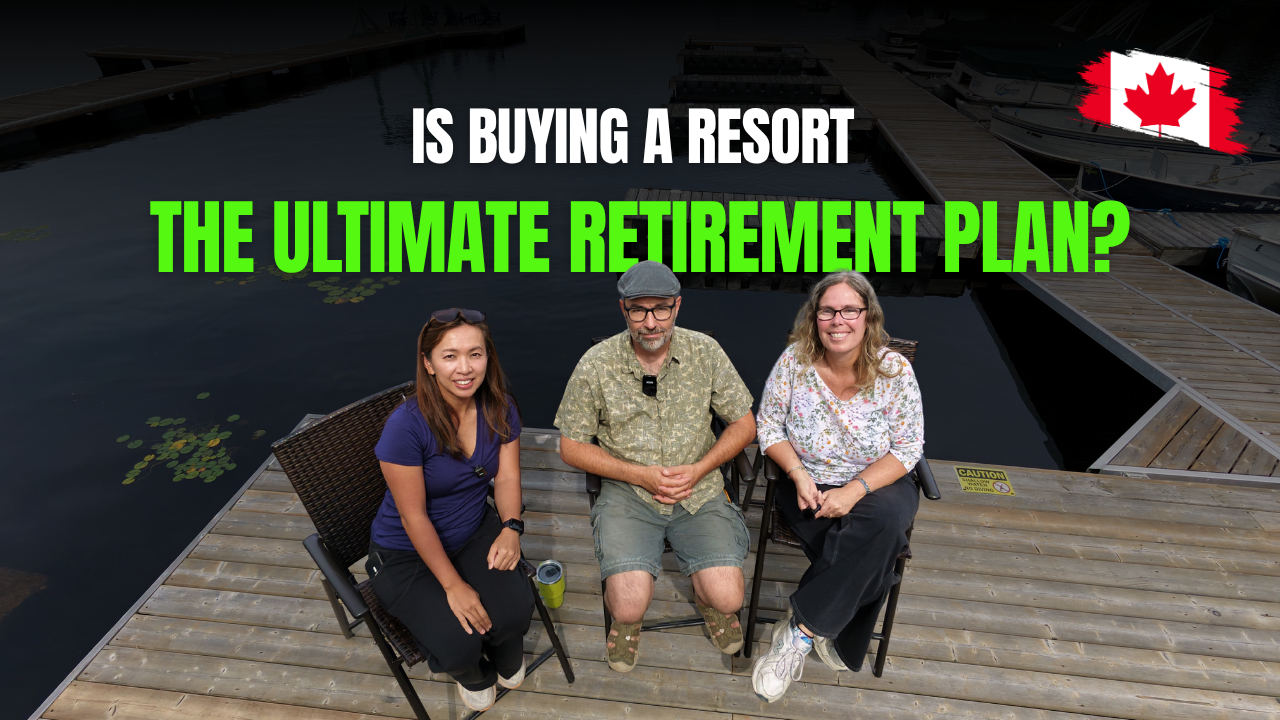
That’s exactly how Ed and Christine’s ownership of Springwood Cottage Resort in Arden, Ontario began. I spent a week there recently with my family and friends: board games, paddleboards, lake time, the whole thing. I couldn’t resist sitting down with the owners to ask the question I always ask: what does this actually look like behind the scenes?
Both Ed and Christine came from serious corporate careers. Ed had been a small-business owner (he ran a pizzeria at one point), a real estate investor (he owned a duplex when he was young), and eventually a CFO. Christine spent her career in HR, most recently as an executive across high tech, craft beer, and defense. Hospitality had been a “someday” dream for both of them. They’d actually looked at a property 10 to 15 years before they bought Springwood, back when they were picturing something much smaller, like a B&B. When the timing finally lined up, they went considerably bigger: 17 individual cottages, plus a house across the street.
Five and a half years in, here’s what they told me.
1. You’re Buying a Business, Not a Postcard
The waterfront and the campfires are the product. But what you’re actually buying is a business, with guests, staffing, systems, seasonality, and ongoing capital needs.
As Ed put it, financing on a property like this typically covers only about 50% loan-to-value. The rest came out of their own capital, and that’s before accounting for the renovations and upgrades they’ve made since taking over: new docks, several cottages renovated top to bottom, and a long list of “there’s something at every single house.”
The lesson: the purchase price is the floor, not the ceiling. Budget for repairs, upgrades, and cash flow surprises well beyond closing.
2. The First Year Will Ask More of You Than You Expect
Ed and Christine closed on March 1, in the middle of a snowstorm and COVID, with guests already on site. Ed drove out with his truck and trailer loaded with tools from home, and partway there, the power went out.
There was no staff, no operating history, and no processes waiting for them. It was, in their words, “purely owner-operator” before, and nothing transferred with the sale.
Christine had originally pictured working the business part-time while keeping their home base in Ottawa. Instead, it was full-in, all the time, right away. Financial statements and property inspections tell you what you’re buying. They don’t tell you what it takes to run it. That operational knowledge often lives only with the outgoing owner, and it walks out the door with them unless you plan for the transition.
3. Staffing Is the Real Bottleneck in Rural Hospitality
Christine, with her HR background, expected staffing to be a challenge, but not to this degree. Finding the right people, in a rural location, for a highly seasonal business, was harder than either of them anticipated.
Their solve: keep a core team employed year-round, and add students in the summer. Staff who work the store or the marina in July might be painting cottages in January, cross-trained so nobody has to be laid off, re-recruited, and re-trained every single season.
They could, in theory, shut down after Thanksgiving and reopen in the spring. They don’t, because that model means starting from zero with hiring and training every single year.
4. Every Season Needs Its Own Job Description
Summer at Springwood runs close to full capacity, with bonfires, live music, kids’ activities, and guest relations from morning to night. The off-season is a completely different job: repairs, budgets, marketing, and infrastructure work.
One concrete example: when they bought the place, the booking system was a paper binder, with a first name and maybe a phone number. They’ve since moved the entire operation online.
Five to six years in, that groundwork is finally paying off. They’re starting to take the occasional vacation and, in Christine’s words, “think about the business rather than being in the business.”
5. Build Something Guests Can’t Get Anywhere Else
Here’s the detail that first put Springwood on my radar: their board game collection. It started small, with about 100 games when they took over, and grew because their son studied game development at Brock University and got the whole family more invested in the hobby.
About a year into ownership, Christine floated the idea to the online board game community: categorized, labeled games, sorted by difficulty and audience. Within an hour or two of posting, she had two or three bookings. That was the signal. The collection has since grown to close to 1,000 games in a dedicated board game lounge, plus a separate “share shed” of standard family and party games for anyone staying at the resort. They’ve since partnered with companies like Changeling and Dining in Dragons to host board game retreats.
The lesson: in a seasonal business, your off-season demand doesn’t come from the weather. It comes from something distinctive enough that people will show up regardless of the forecast.
6. Have the Runway Before You Jump
I asked what they’d tell someone in a corporate job who’s got the entrepreneurial itch. Their answer, paraphrased: get your financial footing sorted before you leap. You need savings that cover more than the acquisition because the business will throw surprises at you that need cash, and if the cash isn’t there, it’s “a downward spiral.”
Their realtor told them something worth repeating here too: it’s far better to invest heavily at the front end and get the business to where you want it, rather than slowly chipping away over years, because that slower path is usually where people give up before they ever reach the vision they started with.
And don’t do it for the money. Ed and Christine were both clear that this only works if you actually love the guest experience, the team, and the long game, because most new business owners don’t turn a profit in year one, and the ones doing it purely for the payday tend to quit right there.
Final Thoughts
Springwood isn’t a passive investment, and Ed and Christine would be the first to tell you that. It’s a full operating business that happened to come with a lake view. Five years in, they wouldn’t do it differently, but they’d absolutely go in with more staff lined up from day one.
If you’ve ever daydreamed about trading the corporate grind for something with your name on the door, whether that’s a resort, a short-term rental portfolio, or a hospitality venture, what’s actually stopping you: the capital, the risk, or the runway?
Next Steps
If you want to make sure your file can stand up to a second look, Book a consultation with my team today. We help everyday Canadians navigate the confusing world of taxes so you can keep more of what you earn.
Until next time, happy Canadian Real Estate Investing.
Cherry Chan, CPA, CA
Your Real Estate Accountant