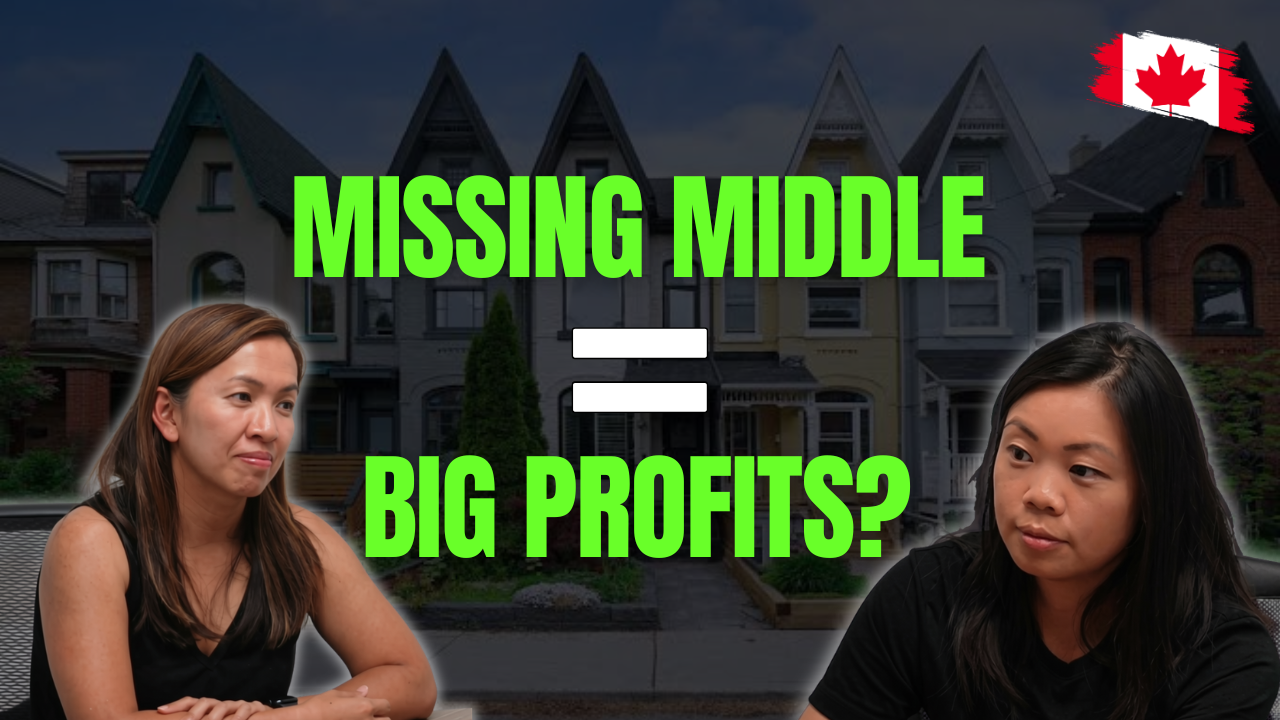
Earlier this month, I had the pleasure of interviewing Lisa Michaud on my YouTube channel, Real Estate Tax Tips. Lisa is a real estate coach, intentional investing advocate, and the host of the Golden Girls Podcast. She has built a portfolio of over 100 rental units across Canada while living in Vancouver—and she did it without visiting many of the properties before purchasing them.
Lisa’s story caught my attention because of how closely her message aligns with what I try to share with clients. She does not just buy properties for the sake of growth. Every deal she makes is driven by her personal vision of financial freedom. She shares openly about her journey, her setbacks, and the mindset shifts that helped her scale from accidental landlord to full-time investor and coach.
Whether you are just starting your real estate journey or looking to grow your existing portfolio, Lisa’s story will help you reframe your approach and ask better questions. Here are seven lessons from our conversation about investing with intention and building a profitable real estate portfolio remotely.
Start With the Question That Matters
Lisa faced a health scare that made her pause and ask, “What if I only had one or two
years left to live?” Her answer was immediate: move to Vancouver and live a more
meaningful life.
Instead of focusing on why it could not happen, she started asking, “How can I make
this possible?”
This mindset shift became the foundation of her investing strategy—every decision
since has been aligned with building a life she actually wants to live.
Begin Small, but Begin Intentionally
Lisa and her husband started as accidental landlords with a single property. For years,
they managed it passively while focusing on their careers.
The turning point came when they realized that their money was sitting idle. They were
working hard, but their investments were not. That realization led them to pursue
intentional real estate investing.
They explored different strategies including rent-to-own and short-term rentals before
moving into multifamily. With each move, they got more strategic about how their
investments supported their freedom goals.
Scale with the Right Financing Strategy
Many investors stop after a few properties because traditional financing rules them out.
Lisa took a different approach.
To scale beyond their initial purchases, they used:
- Commercial financing for properties with five or more units
- Vendor take-back financing and private lending
- Home equity through the Smith Maneuver
- Partnerships and promissory notes
With each transaction, they evaluated not just how to acquire the property, but how to
structure the deal to support long-term sustainability.
Invest Remotely with Confidence
Living in Vancouver made local investing nearly impossible, so Lisa began exploring
other markets. She and her husband now primarily invest in Saint John, New
Brunswick.
Before buying, they flew across the country to meet realtors and property managers in
person. This trip allowed them to align on standards—what one person calls “good
condition” may look very different to another.
Once trust and expectations were set, they were able to buy properties sight unseen,
even during COVID lockdowns. At one point, they purchased eight properties without
visiting any of them.
The key is having a trusted team, clear systems, and well-modeled financial
assumptions.
Run the Numbers with Realistic Cash Flow
Lisa is a numbers person, and every property must meet specific cash flow
benchmarks.
They typically look for $100 to $200 per door in monthly cash flow. Each deal is
modeled with a good, better, and best scenario, and assumptions are made
conservatively.
Some of their practices include:
- Budgeting higher for renovations than quoted
- Assuming lower rents than market averages
- Ignoring mortgage paydown when calculating return
- Accounting for future tax reassessments
This discipline helps them stay profitable and sleep at night—even when managing over
100 doors.
Know Your Financial Independence Number
Rather than chasing door counts, Lisa recommends building a strategy around your actual financial goals. They calculated their financial independence number by mapping out three monthly budgets:
- A lean version for essential expenses
- A current version based on existing lifestyle
- A dream version that includes travel, giving, and flexibility
- From there, they calculated how much income they needed from real estate to replace their living expenses. For example, if each door generates $100 in net income and you need $10,000 per month, you need 100 doors. If you can earn $200 per door, that drops to 50. The math is simple. The strategy is where the intention comes in.
Build Capacity as You Grow
Lisa shared a recent example where a car drove into one of their buildings. While it
sounds stressful, her team handled it calmly and efficiently.
Years ago, that event would have caused panic. But over time, they built the capacity to
manage larger risks.
The process of scaling was gradual. With each property, they strengthened their
systems, improved their decision-making, and built confidence in their team. They were
not just growing a portfolio. They were growing into the type of investors who could
handle one.
Final Thoughts
Too many investors chase properties without purpose. Lisa’s story is a reminder that the
point is not to own real estate for the sake of it. The point is to build a life you love.
That begins with asking yourself the right questions and creating a plan that supports
your values.
Real estate is just the tool. Intention is the strategy.
If you’d like to hear directly from her, feel free to watch the full interview on YouTube or read the accompanying blog post for more insights.
Watch the interview: https://www.youtube.com/watch?v=lcIbBF0P4NI
Until next time, Happy Canadian Real Estate Investing.
Cherry Chan, CPA, CA